


Hey there, fellow painters and DIY enthusiasts! As a supplier of bristle ceiling brushes, I've seen my fair share of good and not - so - good brushes out there. Today, I'm gonna share with you how to tell if a bristle ceiling brush is of good quality.
1. Bristle Material
The first thing you wanna look at is the bristle material. Good quality bristle ceiling brushes usually come with natural or synthetic bristles.
Natural bristles, typically made from animal hair like hog bristles, are great for oil - based paints. They have a unique texture that can hold a good amount of paint and distribute it evenly on the ceiling. The natural fibers are flexible and can adapt to the surface, making it easier to cover large areas. For example, when you're using an oil - based enamel paint on a ceiling, a natural bristle brush will soak up the paint well and leave a smooth finish.
On the other hand, synthetic bristles are a popular choice for water - based paints. They are more durable and resistant to water, which means they won't get damaged easily. Synthetic bristles are also great for detailed work. If you're doing a ceiling with some intricate designs or patterns, a synthetic bristle brush will give you more control. You can check out our Brush for Painting Ceiling to see the different bristle materials we offer.
2. Bristle Density
Bristle density is another important factor. A good quality brush should have a proper density of bristles. If the bristles are too sparse, the brush won't hold enough paint, and you'll have to dip it into the paint can more often. This can lead to an uneven finish on the ceiling.
On the contrary, if the bristles are too dense, it might be difficult to spread the paint evenly. You might end up with clumps of paint or streaks on the ceiling. A well - balanced bristle density will ensure that the brush holds an adequate amount of paint and distributes it smoothly. When you're shopping for a brush, take a close look at the bristles. You can run your fingers through them to get a feel for the density.
3. Bristle Length
The length of the bristles also matters. Short bristles are great for more precise work. They give you better control, especially when you're painting around edges or corners. Our Short Bristle Ceiling Brush is perfect for those detailed jobs.
Longer bristles, on the other hand, are better for covering large areas quickly. They can hold more paint and cover a wider surface with each stroke. However, if the bristles are too long, they might bend or splay out, which can affect the quality of the paint job. So, it's important to choose the right bristle length based on your painting needs.
4. Handle Quality
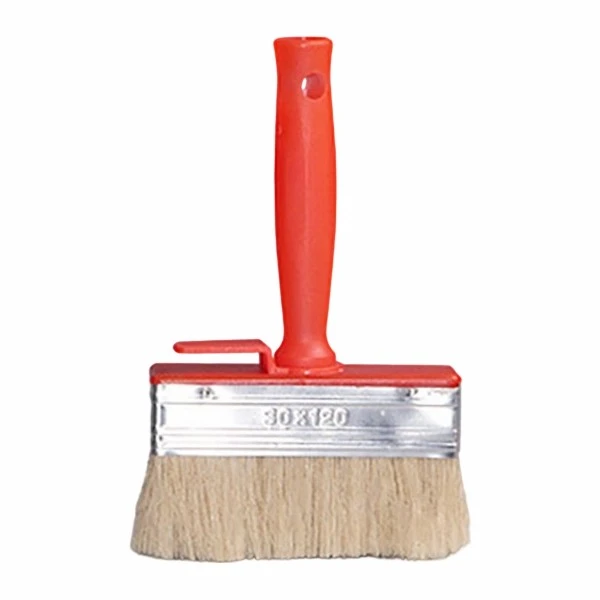
Don't forget about the handle! A good quality bristle ceiling brush should have a comfortable and sturdy handle. The handle should be easy to grip, even when your hands are wet with paint.
Plastic handles are a popular choice because they are lightweight and easy to clean. Our Plastic Handle Ceiling Brush is designed with ergonomics in mind. It fits well in your hand and reduces fatigue during long painting sessions.
The handle should also be firmly attached to the brush head. You don't want the handle to come loose while you're painting, which can be really frustrating. Give the handle a little tug to make sure it's secure.
5. Brush Head Shape
The shape of the brush head can make a big difference in how well the brush works. A rectangular brush head is great for covering large, flat areas on the ceiling. It allows you to make long, smooth strokes and cover a lot of ground quickly.
Some brush heads have a bevelled edge. This is useful for painting along the edges of the ceiling or for getting into tight corners. The bevelled edge can help you get a clean, sharp line.
6. Durability
A good quality bristle ceiling brush should be durable. It should be able to withstand repeated use without losing its shape or shedding bristles. You don't want to buy a brush that falls apart after a few uses.
When you're testing a brush, you can gently pull on a few bristles to see if they come out easily. If they do, it's a sign that the brush might not be of good quality. Also, look at the overall construction of the brush. A well - made brush will have a solid build and won't break easily.
7. Paint Release
The ability of the brush to release paint evenly is crucial. A good brush should be able to release the paint smoothly and consistently. You don't want a brush that holds onto the paint too tightly or releases it in clumps.

To test the paint release, dip the brush into some paint and then make a few strokes on a test surface. Observe how the paint comes out of the brush. If it spreads evenly and smoothly, it's a good sign that the brush has good paint release properties.
8. Cleaning Ease
Finally, consider how easy the brush is to clean. After you're done painting, you'll want to clean the brush quickly and effectively. A good quality brush should be easy to clean with soap and water.
Synthetic bristles are generally easier to clean than natural bristles. They don't absorb as much paint, so they can be rinsed clean more easily. Make sure the brush can be thoroughly cleaned without losing its shape or quality.
So, there you have it! These are the main things to look for when you're trying to figure out if a bristle ceiling brush is of good quality. If you're in the market for a high - quality bristle ceiling brush, we've got you covered. We offer a wide range of brushes that meet all these quality standards.
If you're interested in purchasing our bristle ceiling brushes or have any questions about our products, feel free to reach out. We're always happy to help you find the perfect brush for your painting project.
References:
- Personal experience as a bristle ceiling brush supplier
- Industry knowledge on paint brushes and their quality factors


