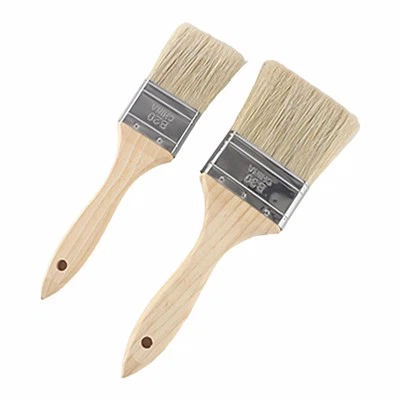
In painting operations, the method of using paintbrushes not only affects construction efficiency but also directly determines the uniformity, adhesion, and final surface quality of the coating. Mastering standardized techniques that meet the material characteristics and scene requirements is the foundation for achieving refined painting.
Substrate pretreatment is the first step before brushing. Whether the substrate is metal, wood, or concrete, it is necessary to remove dust, oil, and loose layers by sanding. If necessary, a matching primer should be used to seal pores to prevent subsequent coating from developing pinholes or peeling due to interface contamination. Brush selection must match the paint viscosity and the shape of the work surface: high-viscosity epoxy paints are best applied with a stiff-bristled flat brush to enhance scraping force, while water-based latex paints can be applied with a soft-bristled round brush to reduce brush marks; for curved or corner areas, a flexible brush handle with an angled brush head is recommended to ensure close contact without dead angles.
Force control and brush path constitute the core techniques. Ideally, brushing should follow the principles of "moderate paint application, edge-to-center application, and alternating horizontal and vertical strokes": the brush bristles should not penetrate more than one-third of the paint to avoid dripping; first, apply paint along the edge of the substrate to establish a baseline, then proceed with overlapping brush strokes, keeping the width of each coat within 1.5 times the effective length of the brush bristles to prevent surface film formation from affecting interlayer bonding. For vertical surfaces, maintain a stable brush speed and slightly flick the brush upwards at the end to reduce the risk of sagging; for large flat surfaces, brush in sections, overlapping each section by one-third of its width to ensure complete coverage.
The finishing touches are often overlooked but crucial. After brushing, before the coating is completely dry, lightly sweep away any uneven areas with a clean brush to remove visible brush marks and air bubbles; if multiple coats are required, wait until the previous coat is touch-dry before applying the next, and brush at a perpendicular angle to the previous coat to improve coating density. Furthermore, different coating systems require corresponding adjustments to technique parameters-for example, high-solids coatings require shorter intervals between single dips to prevent skinning, while UV-cured coatings require rapid, continuous brushing to avoid uneven curing due to localized excessive thickness.
A scientific approach to paint brush operation essentially involves systematically controlling materials, tools, and the environment to transform experiential skills into reproducible process standards. Only by strictly adhering to operational logic can efficiency be improved while achieving stable and controllable coating quality.