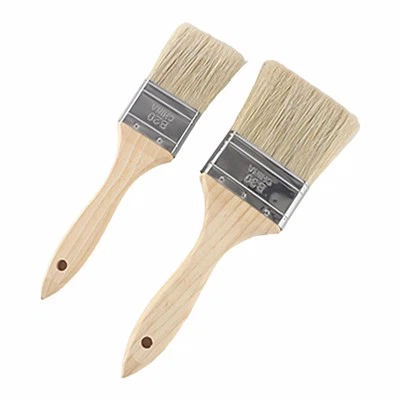
Roller brushes come in two main types: American and European. The main difference lies in the construction of the roller core and the shape of its support. Roller brushes are an important component of paintbrushes and are currently the most widely used tool for applying latex paint. They are categorized into long-bristled, medium-bristled, and short-bristled types, referring to the length of the bristles rather than the thickness of the roller itself. Roller brush bristles are typically made of either wool or synthetic fibers. Different roller brushes produce different effects. Long-bristled rollers create fine textures and a slightly uneven, textured finish. Short-bristled rollers produce a more even, smooth finish without unevenness. Medium-bristled rollers fall somewhere in between. Uses: 1. Fine-bristled roller brushes require a very smooth wall surface and well-applied putty; uneven surfaces will not be covered. 2. Medium-bristled roller brushes are generally used on walls without such high requirements. Roller brushes come in three types: long-bristled, medium-bristled, and short-bristled. This refers to the length of the bristles, not the thickness or length of the roller itself. The bristles are typically made of either wool or synthetic fibers. Most roller brushes are made of wool or foam plastic and can be categorized into paint roller brushes, textured roller brushes, floor paint roller brushes, and flat paint roller brushes, primarily used for large-area coating in architectural decoration projects. They can also be used to apply various blended paints, such as latex paint, rust-preventive paint, interior and exterior wall paints, and wallpaper paste.
 English
- English
- Français
- Deutsch
- 日本語
- Italiano
- Español
- Português
- русский
- 한국어
- فارسی
- عربي
- Čeština
- Norsk
- Latviešu
- Eesti
- हिंदी
- magyar
- Kreyòl Ayisyen
- עברית
- slovenščina
- Polski
- bosanski
- Malti
- Gaeilgenah Éireann
- Svenska
- O'zbek
- dansk
- Cymraeg
- Indonesia
- România limbi
- Български
- বাংলা
- Srbija jezik (latinica)
- اردو
- українська
- Lietuvių
- Melayu
- íslenska
- slovenčina
- ไทย
- Català
- Việt Nam
- Bai Miaowen
- Türkçe
- Nederlands
- Ελληνικά
- suomi
- hrvatski